How to Style a Minimalist Mantel
Learn how to create a beautiful minimalist mantel using neutral colors, natural textures, ceramic decor, and thoughtfully layered accessories.

A mantel is one of the most quietly powerful surfaces in a home. Left empty, it feels unfinished; overcrowded, it feels busy. Styled with restraint, it becomes a focal point that sets the tone for the entire room. The secret to a minimalist mantel isn't adding less — it's choosing well.
Start With a Neutral Palette
Begin with a restrained color story. Warm whites, soft greiges, muted clays, and pale oat tones create a calm foundation that lets each object breathe. Limit yourself to two or three tones so the eye can rest. When everything reads in the same quiet range, a single textured piece becomes the standout.
Bring in Natural Elements
Nature is the minimalist's best accessory. A branch of dried eucalyptus, a single stem in a slim vessel, or a smooth stone adds life without clutter. Keep the arrangement asymmetrical — one taller element paired with a lower one — to feel collected rather than arranged. Natural materials ground the mantel and connect it to the rest of the room.
Let Ceramic Vases Do the Talking
Ceramic is the workhorse of minimalist styling. A pair of matte vases in graduated heights, or a single sculptural piece, gives the mantel structure and a point of view. Choose unglazed or softly glazed finishes that catch the light. See the living room collection for more in that spirit. Let one vase lead and a smaller one echo it — never match them exactly, which reads stiff.
Anchor With Abstract Artwork
A single piece of abstract art leaning against the wall creates instant height and a focal point without the commitment of hanging hardware — see how a small living room gains height the same way. Choose work with soft fields of color or a quiet line drawing. If you prefer a framed piece, keep the frame simple — thin wood or matte black — so the art leads, not the frame.
Layer Textures, Not Objects
Minimalism rewards texture over quantity. Combine a smooth ceramic with a ribbed linen, a rough stone, and the soft line of dried foliage. The contrast of finishes creates depth so the surface never feels flat, even with only three or four pieces, the same layering the living room picks for storage, light, and greenery are built on. Vary heights and let some negative space remain — the gaps are part of the composition.
Find Visual Balance
Stand back and squint. The mantel should feel weighted but not symmetrical. Aim for a tall element on one side — a leaning artwork or a tall vase — balanced by a lower cluster on the other. The "rule of three" helps: group items in odd numbers and step them down in height so the eye moves naturally across the surface.
Keep Seasonal Updates Simple
A minimalist mantel adapts with the smallest swap. In spring, a single budding branch; in autumn, a dried wheat stem; in winter, a few pinecones in a small bowl. Change one element, not the whole arrangement, and the mantel stays feeling intentional year-round.
The Takeaway
A beautifully styled minimalist mantel comes down to three things: a quiet palette, a few well-chosen textures, and enough space to let each piece matter. Start sparse, live with it for a few days, then edit. Less, chosen well, always looks like more.
Images are for styling inspiration. Featured products may differ from those pictured.
Shop the Look
Real products from our curated collection to help you recreate this look at home.

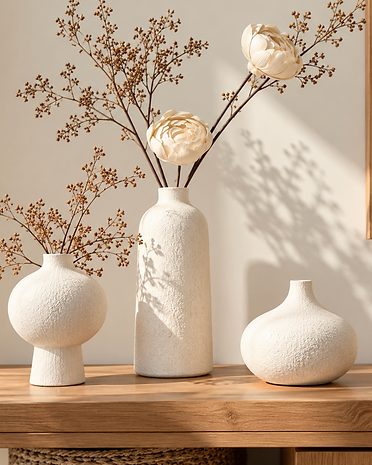
SincereLuxe Ceramic Vase Set
Best for adding organic texture to shelves and tabletops
Set of three white ceramic vases with a stone-textured finish for mantel, console, or shelf styling.
Browse the Collection
Explore thoughtfully chosen home products, curated for every room.
Explore Our Collection
