7 Minimalist Kitchen Organization Ideas for a Clutter-Free Space
Kitchen order lasts when every cabinet, drawer, and counter has a single honest job. These seven minimalist kitchen organization ideas focus on how the space works inside, not just how it looks on top, so you can declutter, store, and reach what you actually use without buying your way to order.
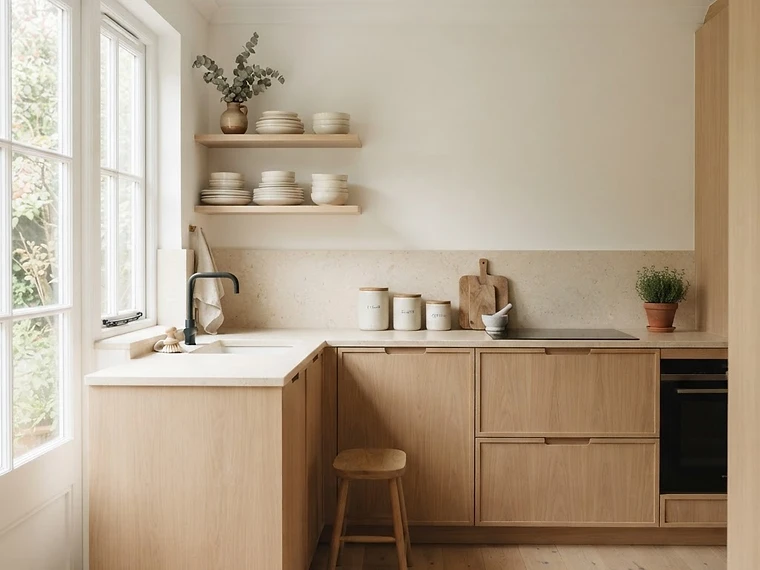
1. Declutter by zone, not by drawer
Trying to reset the whole kitchen in a weekend usually ends halfway through, with everything piled on the table. Work one zone at a time instead: the cookware cabinet, the utensil drawers, the pantry shelf, the under-sink area. Empty that single zone completely, wipe it down, and sort what came out into three piles: keep and return, relocate to a better home, and let go. Only what belongs in that zone goes back in, and it goes back in a way you can see it. Zone-by-zone decluttering is the foundation of every other kitchen organization idea here, because a drawer you can assess at a glance stays organized far longer than one you crammed full in a hurry.
2. Consolidate appliances where practical
A countertop crowded with single-task machines is the most common form of kitchen clutter, and the easiest to quietly reduce. Before adding anything new, audit what each appliance actually does and whether one capable tool can cover several of those cooking functions on a single footprint. A 6-quart air fryer with air fry, roast, bake, broil, dehydrate, proof, reheat, and keep-warm settings consolidates a lot of everyday cooking onto one basket, which frees up the counter and outlet space that several single-purpose machines would otherwise occupy — see the kitchen collection for tools that earn their footprint. The goal is not minimalism for its own sake. Keep the tool you use every morning if nothing else does its job. Consolidate only where one genuinely capable appliance covers the functions of two or three you rarely reach for.
3. Give every drawer a single job
A drawer becomes a junk drawer the moment it stops having a purpose. Assign each one a single job: utensils, cooking tools, food storage, or wraps and bags, and then keep only what fits that job inside it. Divided inserts make the assignment hold. A five-piece set of bamboo organizer trays lets you size a wide drawer for cooking utensils and a narrow one for small gadgets, so every item has an address instead of sliding to the back. Kitchen drawer organization works best when the dividers match what you actually own, so lay your tools out first and choose the tray sizes around them. A drawer with one job, divided so you can see every piece at once, is the difference between reaching for what you need and digging for it.
4. Organize the under-sink cabinet
The cabinet under the sink is one of the largest unused storage zones in most kitchens, and most people fill it with loose bottles and a hope they stay upright. Give it a real system. A 2-in-1 holder that dispenses trash bags from one compartment and stores dishwasher pods in another turns a chaotic cavity into a labeled, vertical zone you can reach without unpacking it. Keep the bags in the dispenser and the pods in their closed container, and store any cleaning concentrates behind them. Store dishwasher pods and all cleaning supplies securely away from children, in closed containers and behind a cabinet latch if little hands can reach. A few minutes spent zoning the under-sink cabinet frees up the pantry and the counter, and it keeps hazardous supplies out of daily reach.
5. Choose space-saving countertop tools
Small kitchen storage is often a sizing problem, not a quantity problem. A full-width four-slice toaster takes counter that a narrow kitchen simply does not have, while a slim, long-slot two-slice model toasts the same bread on a fraction of the footprint. Before replacing any countertop tool, measure the spot it lives in and choose for the space you actually have, not the space you wish you had. Look for tools with a small footprint that still do the one job you bought them for, like a slim toaster with a long slot that fits artisan slices without claiming half the counter. Right-sizing the countertop is one of the cheapest kitchen organization ideas available, because it costs nothing to move a too-large tool into a cabinet and keep only what fits, with our countertop and storage picks for a small kitchen as a starting shortlist.
6. Keep daily-use essentials accessible
Organization is not about hiding everything, it is about placing things at the right distance. Daily-use essentials belong within arm's reach of where you use them; everything else belongs in a cabinet or the pantry. Salt and pepper, for example, are touched at nearly every meal, so a pair of grinders kept at the stove or table makes sense, while the backup supply stays stored away. Apply the same test to everything on your counter: if you reach for it most days, it earns the spot; if you reach for it once a month, it does not. Keeping daily-use essentials accessible and storing the rest is how a minimalist kitchen stays functional instead of performative, and it stops the counter from becoming a parking lot for tools that belong behind a door.
7. Reduce unnecessary duplicate kitchen gadgets
Most kitchens accumulate duplicates without anyone noticing: three spatulas that do the same job, two small blenders for different sizes of smoothie, a hand mixer and a stand mixer used twice a year. Audit the duplicates and keep one capable tool that covers the range. A 72-ounce, high-wattage blender handles family-size smoothies, sauces, and soups in a single pitcher, which may reduce the need to keep several smaller blending gadgets on the shelf. Reducing duplicate kitchen gadgets is different from minimalism as a look. It is about owning one tool that genuinely works instead of three that almost work. Once the duplicates are gone, what remains gets used more, and the storage that held them becomes available for the things you actually reach for.
The takeaway
Minimalist kitchen organization is not a finished look you achieve in a weekend. It is a set of habits: work one zone at a time, give every drawer and cabinet one job, keep daily essentials close and store the rest, and let one capable tool do the work of several. Start with a single cabinet this week, and let the order spread from there. The goal is a kitchen that works the way you cook, with room to reach what you need and nothing in the way.
Images are for styling inspiration. Featured products may differ from those pictured.
Shop the Look
Real products from our curated collection to help you recreate this look at home.

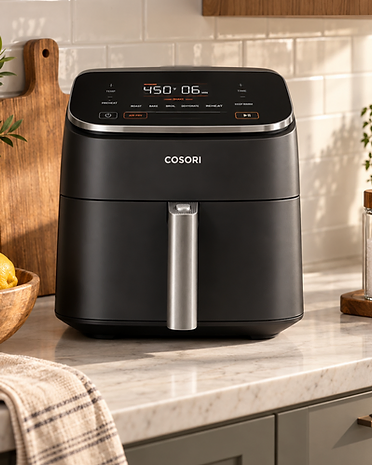
Cosori TurboBlaze Air Fryer, 9-in-1, 6 Qt, PFAS-Free Ceramic Coating
Best for A 9-in-1 6-quart air fryer with a PFAS-free ceramic coating that replaces a fryer, oven, toaster, and dehydrator in one basket
Cosori TurboBlaze air fryer, 9-in-1, 6-quart, PFAS-free ceramic coating, 90°–450°F, 5 fan speeds, air fry/roast/bake/broil/dry/frozen/proof/reheat/keep warm, safety lock, 1725W.

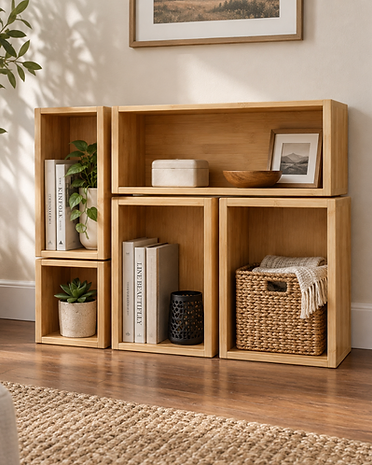
ROYAL CRAFT WOOD 5-Piece Bamboo Drawer Organizer Set
Best for Drawer organization
Multi-use bamboo storage trays for kitchen, bathroom, office, makeup, and jewelry — a 5-box set that doubles as a junk-drawer tray, utensil holder, and storage bin.

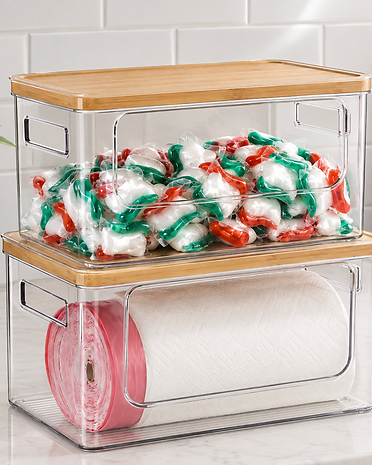
Hudgan 2-in-1 Trash Bag Dispenser & Dishwasher Pod Organizer
Best for Under-sink storage
Under-sink 2-in-1 holder that dispenses trash bags and stores dishwasher pods — clear containers with bamboo lids for kitchen, pantry, or laundry room storage.

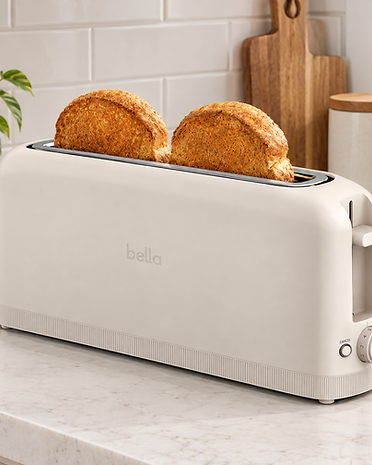
bella Fits-Anywhere™ 2-Slice Slim Toaster
Best for Slim, space-saving toasting
A slim, long-slot 2-slice toaster with a space-saving footprint and a 5-level browning control — in Oatmilk.

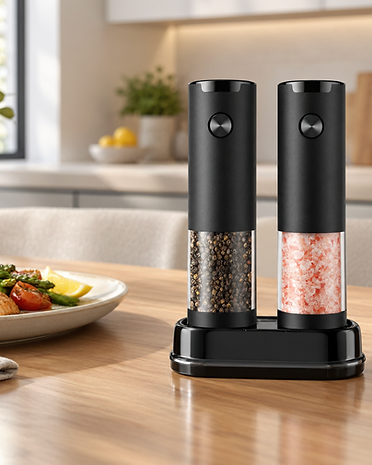
Electric Salt and Pepper Grinder Set — Battery Pepper Mill Shakers with Adjustable Coarseness & LED Light
Best for Effortless everyday seasoning
Automatic battery-operated salt and pepper grinders with adjustable coarseness, an LED light, and upgraded larger capacity for one-touch seasoning at the table or stove.

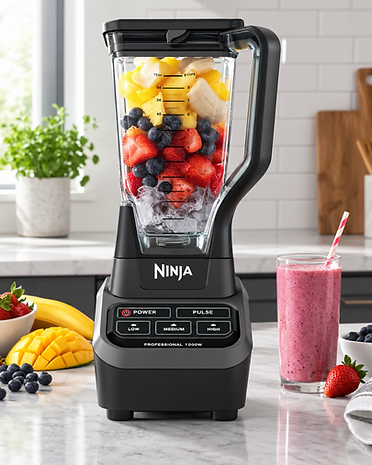
Ninja Professional Blender, 1000W Total Crushing, 72oz Pitcher (BL610)
Best for Smoothies, ice crushing, and family-size batches
1000W Total Crushing blades pulverize ice and blend smoothies, sauces, and soups in an XL 72-oz pitcher built for family batches, with dishwasher-safe parts.
Browse the Collection
Explore thoughtfully chosen home products, curated for every room.
Explore Our Collection
